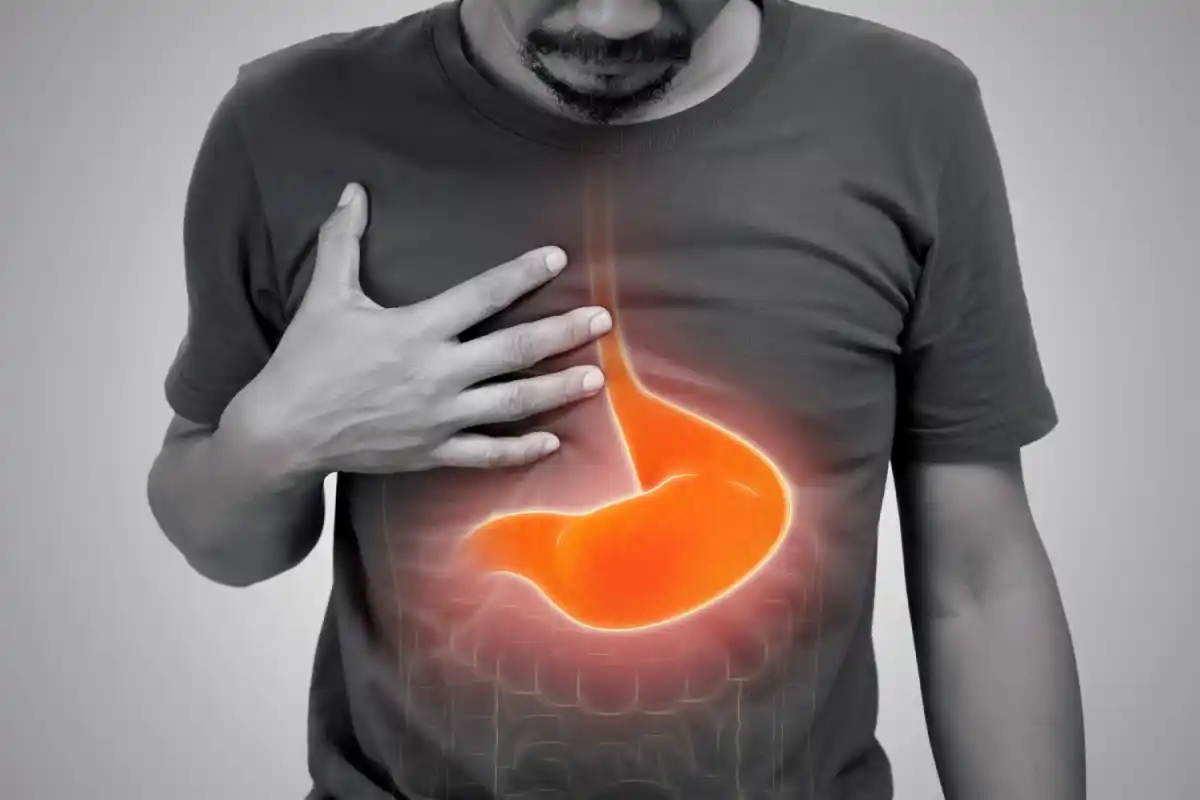
Acid reflux is serious when heartburn strikes more than twice a week, when swallowing hurts, when over-the-counter pills stop working, or when you lose weight or notice bleeding.
By James Maher, MD, Board-Certified Gastroenterologist | Reviewed for accuracy | Updated September 2026
Almost everyone gets heartburn once in a while. A big meal, a late dinner, a spicy plate, and that burning creeps up. That kind of reflux is common and usually harmless. About 1 in 5 adults in the United States get heartburn at least once a week. The problem is knowing when normal reflux has crossed into something that needs a doctor. These are the signs your acid reflux is serious enough to get checked, and why waiting can cost you.
Left alone, ongoing acid reflux can damage the esophagus. Over years it can lead to a condition called Barrett’s esophagus, which raises the risk of esophageal cancer. Catching the warning signs early is how you stay ahead of that.
1. Heartburn more than twice a week
Heartburn that shows up more than twice a week is the line doctors use to separate everyday reflux from GERD, the chronic form that needs treatment.
Once burning becomes a regular thing, it is no longer just a food reaction. It points to gastroesophageal reflux disease, or GERD. GERD means stomach acid keeps flowing back into the esophagus and irritating the lining. Two or more days a week, week after week, is the pattern to watch. At that point, antacids are treating a problem that keeps coming back instead of fixing it.
2. Swallowing feels hard or painful
Trouble swallowing, or a feeling that food sticks in your chest, is a top alarm symptom that means you should see a gastroenterologist soon.
Doctors call this dysphagia. Food or pills feel like they catch behind your breastbone. Sometimes swallowing hurts, which is called odynophagia. Both can mean the acid has narrowed the esophagus, a problem known as a stricture. It can also point to inflammation or, less often, something more serious. This is not a symptom to sit on. The medical guidelines list swallowing trouble as a reason for an upper endoscopy, a scope test that looks straight at the esophagus.
3. Your antacids have stopped working
When over-the-counter antacids or acid reducers no longer control your heartburn, the reflux has likely moved past what home treatment can handle.
Tums, Pepcid, and store-brand acid reducers work well for mild, occasional reflux. When you find yourself taking them every day, or taking more and getting less relief, that is a message. It usually means the acid is stronger or more frequent than these drugs can handle. A gastroenterologist can find out why and prescribe treatment that actually holds. Do not keep raising the dose on your own for weeks.
4. You are losing weight without trying
Unexplained weight loss along with reflux is a red flag that always deserves a prompt medical visit.
Dropping pounds without changing how you eat or exercise is never something to brush off. Paired with reflux or swallowing trouble, it worries doctors. It can signal a narrowing esophagus or a more serious problem underneath. Losing your appetite counts too. The guidelines treat weight loss as an alarm symptom that calls for testing, not watching and waiting.
5. You see blood, or your stool turns black
Vomiting blood or passing black, tarry stools can mean bleeding in the upper digestive tract, and it needs urgent medical care.
Blood is the sign you never ignore. It may look like red streaks in vomit, or vomit that looks like coffee grounds. Bleeding lower down can turn stool black and sticky. Either one can mean an ulcer or damage in the esophagus or stomach. Call your doctor right away, or go to the emergency room if the bleeding is heavy. This is the most serious sign on this list.
6. A cough, hoarse voice, or lump in your throat that won’t quit
A chronic cough, a hoarse voice, or a lump-in-the-throat feeling can be reflux reaching your throat and voice box, sometimes without any heartburn at all.
This one fools people because it does not always burn. Acid can travel up past the esophagus and irritate the throat and voice box. Doctors call it laryngopharyngeal reflux, or silent reflux. The signs are a nagging cough, a raspy voice, a sore throat that lingers, or the feeling that something is stuck in your throat. If these hang on for weeks with no clear cause, reflux is a likely suspect worth checking.
7. Chest pain (after your heart is cleared)
Reflux can cause chest pain that mimics a heart attack, so new or severe chest pain always needs a medical check to rule out your heart first.
Severe reflux can trigger chest pain that feels like pressure or squeezing. It can be hard to tell from a cardiac problem. That is exactly why you should never assume chest pain is only heartburn. Get evaluated. Once a doctor clears your heart, ongoing chest pain tied to reflux is a reason to see a gastroenterologist for a closer look at your esophagus.
What happens if you ignore serious reflux
Ignored GERD can inflame and scar the esophagus, and over time it can lead to Barrett’s esophagus, a precancerous change that raises esophageal cancer risk.
Acid that keeps hitting the esophagus does real damage. First comes inflammation, called esophagitis. Then scarring that can narrow the tube. In some people the lining changes into a type called Barrett’s esophagus. Barrett’s itself causes no pain, which is what makes it dangerous. It is found with an endoscopy and a biopsy. People with long-term reflux face higher risk. That is especially true for men over 50 who smoke or carry extra weight. That is why the signs your acid reflux is serious matter so much. They are your chance to act before damage sets in.
Do you need a GERD doctor in Katy?
If your reflux hits more than twice a week, resists over-the-counter medicine, or comes with any alarm sign like trouble swallowing, weight loss, or bleeding, it is time to see a gastroenterologist.
Knowing the signs your acid reflux is serious is only the first step. Dr. James Maher treats GERD and acid reflux at his practice across from Memorial Hermann Katy. He performs upper endoscopy himself when the exam is needed, and he reviews the results with you the same day. You do not have to live on a handful of antacids. Call 281-945-5190 or book online to get answers.
Frequently asked questions
How do I know if my acid reflux is serious?
Acid reflux is serious when heartburn happens more than twice a week, when it resists antacids, or when you have alarm signs like trouble swallowing, weight loss, vomiting, or bleeding. Any of these means it is time to see a gastroenterologist rather than keep treating it at home.
Is heartburn twice a week a problem?
Yes. Heartburn more than twice a week is the common threshold for GERD, the chronic form of reflux. At that frequency, the acid is irritating your esophagus often enough to cause damage over time. A doctor can confirm GERD and start treatment that works better than daily antacids.
When should I go to the ER for acid reflux?
Go to the emergency room if you vomit blood, pass black or tarry stools, cannot swallow at all, or have severe chest pain. Chest pain from reflux can mimic a heart attack, so it needs an immediate check to rule out your heart. These are not symptoms to wait out.
Can acid reflux turn into cancer?
Long-term, untreated GERD can lead to Barrett’s esophagus, a precancerous change in the esophagus lining that raises the risk of esophageal cancer. The risk is still low for most people, but it is real. That is why ongoing reflux and its warning signs should be evaluated rather than ignored.
What test does a doctor use for serious acid reflux?
The main test is an upper endoscopy. The doctor passes a thin, flexible scope down your throat. A camera on the tip looks at the esophagus and stomach. It can spot inflammation, a stricture, ulcers, or Barrett’s esophagus, and take a biopsy if needed. It is done under sedation and takes only a few minutes.
Will lifestyle changes fix serious acid reflux?
Diet and habit changes help many people, and they are a good first step for mild reflux. Serious or frequent GERD usually needs medical treatment on top of those changes. A gastroenterologist can combine lifestyle guidance with the right medication or procedure for your case.