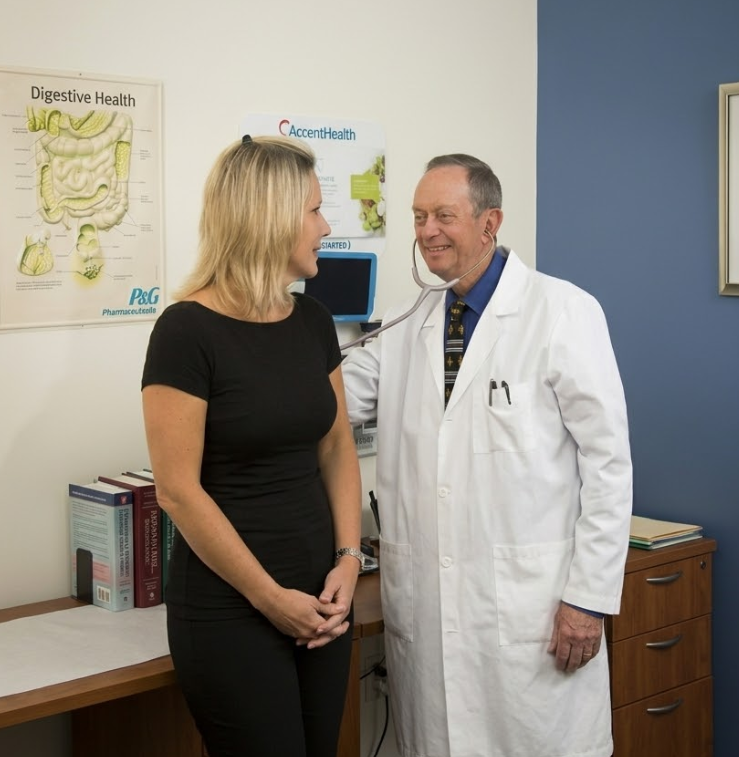
Most people search for a gastroenterologist in Katy after weeks of the same problem: heartburn that antacids no longer touch, a bowel pattern that changed and stayed changed, or a 45th birthday and a reminder about colon cancer screening.
A gastroenterologist is a doctor who specializes in the esophagus, stomach, intestines, liver and pancreas. This guide covers which symptoms are worth an appointment, which ones mean you should skip the appointment and go to an emergency room, when screening should start, and how to plan for costs and your first visit.
Adult GI care and screening in Katy
A GI doctor handles two kinds of visits. Some patients come in with symptoms that need a diagnosis. Others feel fine and need screening, most often a colonoscopy.
At our practice, Dr. James Maher treats adults for:
- Acid reflux and GERD, including Barrett’s esophagus monitoring
- Swallowing disorders
- Crohn’s disease and ulcerative colitis
- Fatty liver disease and other liver conditions
- Pancreatic disorders
- Hemorrhoids, with in-office banding
- Colon cancer screening and polyp removal
The procedures behind those services include colonoscopy, upper endoscopy (EGD), capsule endoscopy, esophageal pH monitoring, esophageal manometry and FibroScan, an ultrasound-based scan that checks the liver for fat and scarring. Dr. Maher is board certified in gastroenterology and internal medicine and performs every colonoscopy and endoscopy himself.
The office is at 19255 Park Row #104, Houston, TX 77084, in the Park Row Medical District, and serves patients from Katy, West Houston and Cypress. Our location page has maps and directions.
Persistent symptoms and urgent warning signs
Most digestive symptoms can wait for an office visit. A few cannot. Knowing the difference saves you both an unnecessary ER bill and a dangerous delay.
Symptoms that call for a GI appointment
Book a visit with a stomach doctor if any of these last more than a couple of weeks or keep coming back:
- Heartburn two or more times a week, or heartburn that over-the-counter medicine no longer controls
- Food that feels stuck, or pain when you swallow
- A change in bowel habits (diarrhea, constipation or narrower stools) lasting more than a few days
- Ongoing belly pain, cramping or bloating
- Weight loss you did not plan
- Fatigue with a low red blood cell count on a blood test
- Abnormal liver tests from your primary care doctor
Several of these overlap with colorectal cancer warning signs listed by the American Cancer Society. Most turn out to have other causes, but a gastroenterologist should be the one to rule that out. For reflux symptoms, our acid reflux treatment page explains how Dr. Maher evaluates GERD and when testing helps.
Signs that need emergency care
The National Institute of Diabetes and Digestive and Kidney Diseases advises getting medical help right away for signs of sudden digestive bleeding:
- Black, tar-like stool
- Stool mixed with dark or bright red blood
- Vomiting blood, or vomit that looks like coffee grounds
- Fainting, lightheadedness or dizziness with any of the above
Confusion, a racing heart, cold hands and feet, pale skin or sweating can signal shock, which is life-threatening. Call 911.
Chest pain gets the same caution. Reflux can cause chest pain, but so can a heart attack, and the heart comes first. Get emergency care for new or severe chest pain, then see a GI doctor once your heart has been checked.
Colon cancer screening timing and options
The U.S. Preventive Services Task Force recommends screening for adults 45 to 75 at average risk. People 76 to 85 should decide with their doctor. A parent or sibling with colorectal cancer, or a personal history of polyps, can mean starting earlier and repeating more often.
| Test | How often | Next step if abnormal |
|---|---|---|
| FIT stool test | Every year | Colonoscopy |
| Stool DNA-FIT (Cologuard) | Every 1 to 3 years | Colonoscopy |
| CT colonography | Every 5 years | Colonoscopy |
| Flexible sigmoidoscopy | Every 5 years | Colonoscopy |
| Colonoscopy | Every 10 years | Polyps are usually removed during the same exam |
Colonoscopy is the only option that finds and removes polyps in one visit. Stool tests are easier to start, but any positive result leads to a colonoscopy anyway.
Screening tests are for people without symptoms. If you have bleeding or a lasting change in bowel habits, your doctor will usually order a diagnostic colonoscopy instead, and insurance treats that differently. Our colon cancer screening page explains how Dr. Maher helps patients choose a test.
Costs, insurance and appointment planning
The practice accepts Medicare and most major insurance plans, and staff confirm coverage before scheduling a procedure. That check matters because the same procedure can cost very different amounts depending on why you have it.
Preventive versus diagnostic billing
A routine screening colonoscopy is preventive care. Most non-grandfathered private plans and Medicare cover it with no cost sharing when the providers are in network. Medicare patients pay 15% coinsurance in 2026 if a polyp is removed, according to Medicare.gov.
An office visit or procedure for symptoms is diagnostic. Your regular copay, deductible and coinsurance apply.
Calls to make before your visit
- Ask your insurance plan whether you need a referral from a primary care doctor. HMO plans often do.
- Confirm that the doctor, the procedure facility and any anesthesia provider are in network.
- Ask whether your visit or procedure will be billed as preventive or diagnostic.
- Ask our office for an estimate of any costs before your procedure date.
New patients are welcome, and same-week appointments are often available, including for urgent concerns.
How to choose a gastroenterologist in Katy
Proximity matters, but it should not be the only filter. Ask these questions before you book:
- Is the doctor board certified in gastroenterology? You can confirm certification through the American Board of Internal Medicine’s public physician lookup.
- Who performs the procedure? Some practices assign procedures to whoever is available. At ours, Dr. Maher performs every colonoscopy and endoscopy.
- Where are procedures done? The location affects facility fees and network status.
- Can you schedule screening without an extra visit? Eligible healthy adults can use our Direct Access Colonoscopy program.
- How will you get results? Ask who explains biopsy and pathology results and how soon.
- Is the practice in your network? Check with your plan, not only the practice website.
Common patient questions
Do I need a referral to see a gastroenterologist in Katy?
It depends on your insurance. PPO plans often let you book directly, while HMO plans usually require a referral. Our office can help you confirm when you call.
What is the difference between a GI doctor and a colorectal surgeon?
A gastroenterologist diagnoses and treats digestive diseases and performs procedures such as colonoscopy and endoscopy. A colorectal surgeon operates on the colon, rectum and anus. Most patients start with a gastroenterologist.
How long does a colonoscopy take?
About 30 to 45 minutes under sedation, and you go home the same day. You need an adult to drive you home.
Can I see a gastroenterologist for heartburn?
Yes. See one if heartburn happens twice a week or more, if over-the-counter medicine stops working, or if you have trouble swallowing or unplanned weight loss.
Will I need a procedure at my first visit?
Usually not. Many patients get a diagnosis and treatment plan from the consultation alone. If you need a test such as an endoscopy, it is scheduled for a later date.
Preparing for a GI appointment
Ten minutes of prep makes the visit more useful. Bring or have ready:
- A short symptom log: what happens, when it started, how often, and what makes it better or worse
- A full medication list, including over-the-counter drugs, supplements and blood thinners
- Recent lab results, imaging reports and any prior colonoscopy or endoscopy reports
- Family history of colon cancer, polyps, celiac disease or inflammatory bowel disease
- Your insurance card and referral, if your plan requires one
- Completed patient forms, which you can download before you arrive
- Two or three questions you most want answered
If you are scheduling a colonoscopy, ask for prep instructions early. Some medications, including blood thinners and diabetes drugs, may need to be adjusted days ahead.
See a gastroenterologist serving Katy and West Houston
A gastroenterologist in Katy can sort out lasting symptoms, keep your colon cancer screening on schedule, and tell you when a problem needs faster attention.
Dr. James Maher sees adults from Katy, West Houston and Cypress at 19255 Park Row #104 in Houston. Call 281-945-5190 to book an appointment or ask about screening, or find directions on our location page.
Frequently asked questions
When should I see a gastroenterologist in Katy?
Book a visit for heartburn twice a week or more, trouble swallowing, bowel changes lasting more than a few days, ongoing belly pain or unplanned weight loss. Adults 45 and older should also schedule colon cancer screening.
What symptoms need emergency care instead of a GI appointment?
Black or tarry stool, vomiting blood, vomit that looks like coffee grounds, fainting with bleeding, or new chest pain need emergency care right away.
At what age should I start colon cancer screening?
Adults at average risk should start at 45. A family history of colorectal cancer or a personal history of polyps can mean starting earlier.
Does insurance cover a visit to a GI doctor?
Most plans cover specialist visits, but copays and deductibles apply to symptom visits. Screening colonoscopy is usually covered as preventive care when in network. Ask your plan about referrals.
What should I bring to my first gastroenterology appointment?
Bring a symptom log, a full medication list, recent lab and imaging reports, prior procedure reports, your family history, your insurance card and any required referral.